
My Puppy Chews Everything: What Real Dog Owners Say Actually Works
"I have a 5-month-old puppy, and he chews on EVERYTHING! I'm already worried about decorating for Christmas." That post, in one of the dog-owner groups we follow, got more than 400 replies in a single day. So we read through them - along with other threads about puppies who eat socks, shoes and scarecrows - to find out what actually worked for real owners. Here's what they told us.
First, the reassurance: it's normal (and it ends)
Almost every owner who replied had been there. Puppies chew because their adult teeth are coming in (roughly between 3 and 7 months), because they explore the world with their mouths, and because chewing is fun when you're bored. The heavy phase usually eases around 6-7 months, and most dogs settle a lot by their first birthday.
One thing owners repeated again and again: every puppy is different. "I've had puppies that chew a lot, and I've had puppies that don't chew at all," wrote one long-time owner. So don't compare your puppy to the neighbor's perfect angel.
The tip owners mentioned most: teach "leave it"
If there was one piece of advice that came up more than any product, it was this. One owner called "leave it" the best command they ever taught: their dog learned it by 5 months, and at one year old she only chews her own toys. The idea is simple - your puppy learns that leaving something alone earns a better reward than grabbing it.
A quick way to start: hold a treat in your closed hand. When your puppy stops sniffing and pulls back, say "yes!" and give them a different treat from your other hand. Practice a few minutes a day, then move to treats on the floor, then to everyday things like socks.
Make "the floor is lava" your house rule
Owners called their puppies "doggie vacuums" for a reason. Socks, underwear, tissues, dryer sheets, hair ties - if it's on the floor, it's fair game. The owners whose puppies never got into trouble with socks had one thing in common: they kept them in drawers and hampers from day one. As one put it, "You have to act like your puppy is an actual baby."
Please take swallowing seriously. In one of the threads we read, an owner shared that they lost their young dog after he swallowed underwear. Fabric and small objects can cause a blockage that needs urgent surgery. If your puppy swallows something they shouldn't, call your vet right away - even if they seem fine.
Give them something better to chew - and the right size
Owners whose dogs left the furniture alone usually had one thing: a great chew that was always available. Several mentioned long-lasting chews like bully sticks for their biggest chewers. The key is variety - something hard, something you can stuff with food, and something softer - rotated every few days so it feels new.
Size matters more than people think. A chew that's perfect for a Golden Retriever can be too big for a Chihuahua, and a small-dog toy can be a choking risk for a big puppy. Most good chew brands come in several sizes, so check the size guide before you buy.

What strong chewers get
Benebone Wishbone Dog Chew
Hard, bacon-flavored, and shaped so a puppy can hold it with their paws. Comes in sizes from tiny pups to big dogs.
See it on Amazon - Benebone Wishbone Dog Chew (opens in a new tab)Don't chase - trade
Many owners described the "sock victory lap": the puppy grabs something, then gallops around the house so everyone chases them. One owner's 5-month-old "runs out of bedrooms with a sock, so proud of himself." Chasing turns it into the best game in the house. Instead, offer a treat or a toy, swap, and move on.
Bitter spray for the things you can't move
For table legs, cables and baseboards, a few owners recommended a bitter "anti-chew" spray. The method they described: as soon as your puppy shows interest in something that isn't a toy, spray it lightly, then hand them one of their own toys instead. Test the spray on a hidden spot first so it doesn't stain.
Frozen food toys for the busy moments
Cooking dinner, on a work call, or just need a break? A food toy stuffed with kibble, wet food or a little xylitol-free peanut butter and frozen overnight buys you real quiet time - and your puppy spends it chewing the right thing.
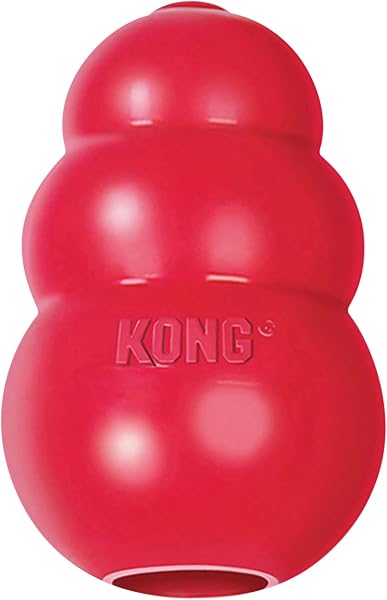
For the 'I need 20 quiet minutes' moments
KONG Classic Stuffable Dog Toy
Fill it with kibble or peanut butter, freeze it overnight, and hand it over when you need a break. Pick the size that matches your dog.
See it on Amazon - KONG Classic Stuffable Dog Toy (opens in a new tab)The Christmas tree question
Since the original post was really about the holidays, here's what owners said worked:
- Fence it off. A baby gate or a small fence around the tree was the most common answer.
- Start small. One family put up only the tree topper the year their puppy was 8 months old. He didn't touch anything - not even the presents or stockings - so this year they're going for the full tree.
- Supervise. Let your puppy near the tree only when you're in the room, at least for the first year.
- Keep the bottom boring. No edible ornaments, tinsel or gifts with food inside within reach.
And yes, some owners said their dogs never cared about the tree at all. (And one owner admitted their 4-year-old doodle has "taken out" two members of the Halloween scarecrow family. Some dogs simply choose their targets.)
The short version
Your puppy isn't being naughty - they're a puppy. Teach "leave it", keep the floor clear, give them great chews in the right size, trade instead of chasing, and watch them closely around anything they could swallow. Owners who did this told us it got much easier within weeks.
Got a chewer at home? Share your dog's story (and the casualties) in our Facebook group (opens in a new tab) - and see today's dog pick.
Some links in this guide are Amazon links. If they become affiliate links, we may earn a small commission at no extra cost to you. Learn more.